
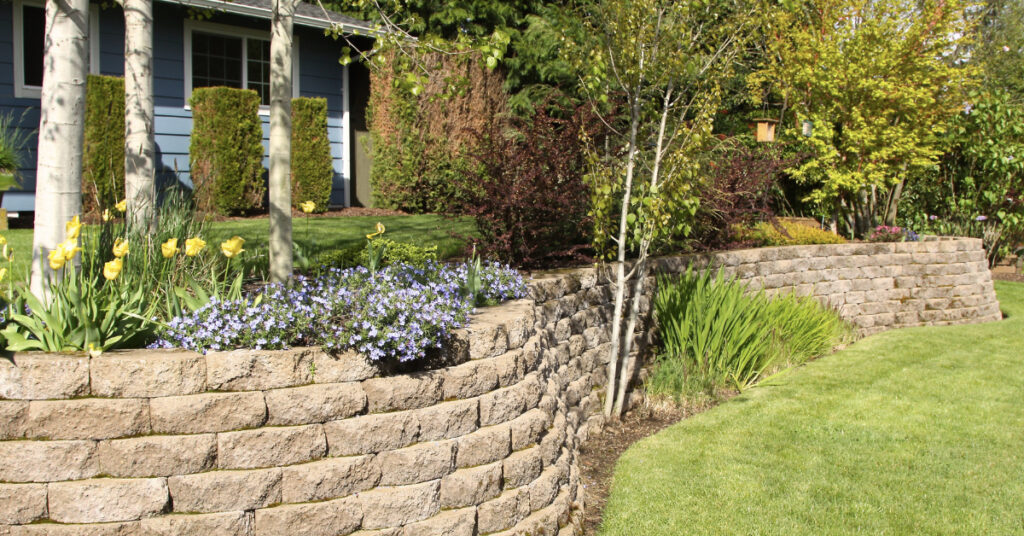
Find any property that’s had significant landscaping work done, and you’ll probably find a retaining wall somewhere. It’s a popular hardscape feature on residential and commercial properties alike. It’s also fairly easy to mess up if you don’t know what you’re doing. While any construction project can go wrong without care and precision, mistakes made during retaining wall construction can turn an otherwise beautiful landscaping project into a costly nightmare.
When there’s a structural failure, you can bet there was an installation error somewhere along the line. The effects are far-reaching. It ruins the project, but the damage also extends to the reputation of the contractor responsible for the retaining wall installation. If you yourself are a contractor, you want to avoid some all-too-common mistakes to keep your customers happy and your reputation intact. Below are some tips and even a training opportunity that you’ll find helpful!
The Common Mistakes
There are countless possible mistakes that stand to be made if you aren’t careful with your retaining wall construction, but there are five in particular we see frequently. The good news? They can be avoided as long as you have the right knowledge! Kick the work boots off and put your learning hat on for a few minutes.
1. Poor Base Preparation
Most of us have played Jenga. It’s a great exercise in weight distribution and structural integrity, and we’re willing to bet you’ve never taken the blocks out of the bottom layer. You know that’s incredibly risky and puts the tower in danger of falling. The fun family game mirrors life, as the foundation is the most critical component of any retaining wall installation. Sadly, it’s also where several projects fall apart.
If a contractor isn’t careful, they could make one of these blunders:
- Skipping proper excavation depth
- Failing to install a compacted gravel base
- Using poorly graded or unstable base material
Best Practice
Make sure you properly excavate the base of the structure with well-compacted aggregate. It provides vital stability that supports the weight of the wall as well as the pressure from the surrounding soil.
2. Ignoring Drainage Requirements
Water is a blessing and a curse; ignore it or don’t properly respect it, and it will find ways to make life difficult. Case in point: Hydrostatic pressure. This is the force created when water builds up behind the wall.
The drainage mistakes you could make during construction that could lead to this issue are:
- Failing to install a drainage pipe
- Skipping out on using drainage aggregate behind the wall
- Grading that directs water towards the wall
Even the sturdiest wall in the world can fail if that dreaded pressure builds behind it. Take the time to perfect the drainage system before moving onto the next step.
Best Practice
Include a perforated drain pipe in your retaining wall installation, as well as free-draining aggregate that will direct water away from the structure.
3. Incorrect Soil Compaction
Don’t skip backfill compaction! It’s a common error in retaining wall construction to just dump soil in and move on, but taking the time to compact the fill dirt in layers will save you struggles later on.
General compaction issues include:
- Backfilling hastily without taking the time to compact the layers
- Using low-quality or otherwise inappropriate soil materials
- Inadequate compaction equipment
Best Practice
Make sure you have enough quality soil and all the proper equipment for compaction. Additionally, build enough time into your schedule to be diligent in this step.
4. Using the Wrong Materials or Blocks
Just because it’s a block doesn’t mean it will be great for a retaining wall! Some products are strictly intended for small garden walls and decorative fixtures rather than functional structures such as retaining walls.
Using incorrect materials during retaining wall construction could lead to:
- Structural weakness
- Premature wall failure
- Safety hazards
Best Practice
This one’s simple. Use materials that are durable enough for a retaining wall.
5. Improper Wall Height Planning
It can be difficult to estimate the engineering requirements for taller retaining walls, but it’s well worth the effort to get it right (something remedied with proper construction training).
In many jurisdictions:
- Walls above certain heights require engineering review
- Additional reinforcement or geogrid may be necessary
- Local building codes must be followed
We can’t force you to follow this advice, but know that ignoring these factors during retaining wall construction could result in dangerous installations and failed inspections.
Upcoming Training
Want to avoid expensive callbacks and reputation damage caused by faulty construction? Investing in professional education is one of the best moves you can make!
The benefits of professional construction training are far-reaching. You can reduce costly installation errors, improve your jobsite efficiency, hone your techniques, and build up lasting credibility with your clients and partners!
The best part? We offer that training, and you can get all the details below!
Event Details
Course: CMHA Segmental Retaining Wall Installer Certification
Dates: March 25–26
Format: Instructor-led training with certification testing
Participants will receive:
- Professional training materials
- Instruction from experienced industry professionals
- Hands-on education in proper wall building techniques
- Certification testing upon completion
Who Should Attend?
This training is perfect for landscaping contractors, crew foremen, hardscape installation professionals, and project estimators. Essentially, anyone involved in retaining wall construction can benefit from this training course.
Get in Touch With RELS
A retaining wall is meant to last. To keep everything in order and maintain the structural integrity of a landscaping project. Remaining diligent and getting everything right is well worth it, as it keeps customers happy and protects your reputation as a contractor. Make mistakes or cut corners, however, and things could get costly (not to mention your customers could regret hiring you).
By following these tips and taking advantage of vital training, you can get the job done right every time and make a name for yourself. For more information, contact us or sign up for training!