
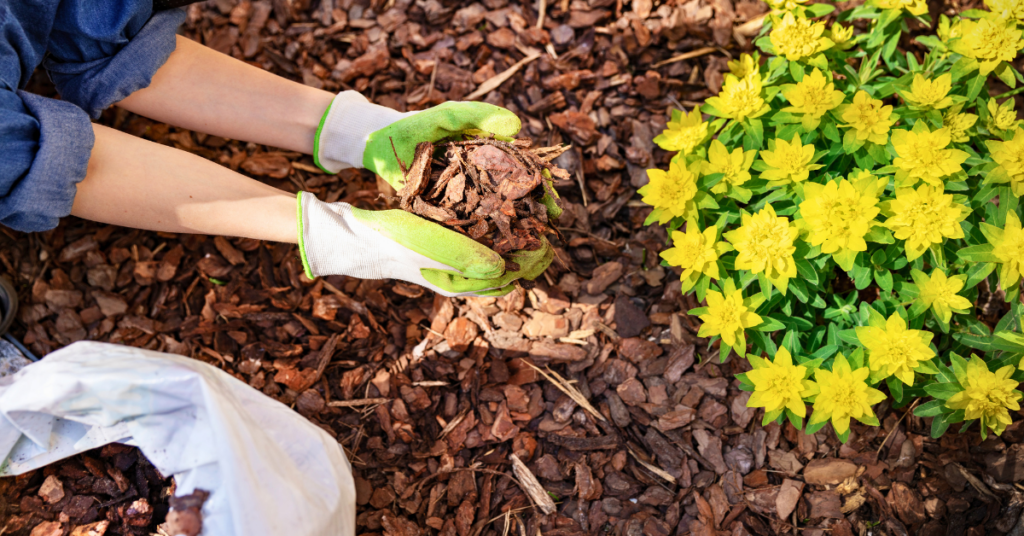
We’ve all been there. We leave the store with 25 bags of mulch in tow, only to fill about a third of the space that needs covering. Back to the store it is, then. Maybe even more than once. You eventually get frustrated and yell at the sky, “How much mulch do it need!?”
This is a wasted time scenario, yet you don’t want to get too much mulch and turn it into a wasted money scenario. How do you determine the right amount of mulch, then? With a little bit of knowledge and planning.
You don’t need to be a mathematician, though. We’ll walk you through how to measure a yard for the right amount of soil or mulch.
Why Measuring First Saves You Time and Money
It might feel unnecessary at first, but measuring before you shop pays off handsomely:
- Avoid overordering bulk materials. Bulk products like mulch, topsoil, and stone are priced by the cubic yard, so getting excess means money left on the table.
- Prevent multiple trips. An extra run back to the supply yard is time you weren’t planning to spend.
- Help our staff give better recommendations. When you come in armed with your measurements, our team can quickly set you up with the right amount of the right kind of products.
- Make delivery smoother. If you’re having materials delivered, accurate quantities mean one load and you’re set.
We work with homeowners and contractors every day across Montgomery County. The customers who come prepared with measurements almost always walk away happier.
The Basics: What You Actually Need to Measure
Whether you’re wondering “how much mulch do I need” for your garden beds or calculating how to measure for topsoil for a lawn project, the process comes down to three steps.
Measure Square Footage
For a simple rectangular or square area, this is easy: Multiply the length by the width. Length × Width = Square Footage.
Example: A bed that’s 20 feet long and 8 feet wide = 160 square feet.
If your yard has multiple separate planting areas or beds, just measure each one and add the square footage together. Don’t try to measure the whole yard and then subtract. That math can quickly get messy.
Decide How Deep the Material Should Be
Depth matters. Here’s how to take it into account, depending on what you’re buying:
- Mulch: Typically 2–3 inches for established beds; 3–4 inches for new installations or weed suppression.
- Topsoil: Depth depends on your project. For lawn overseeding, 1–2 inches is common. For raised beds or new plantings, you’ll want 6 inches or more.
- Decorative stone: Usually 2–3 inches for pathways or borders; 4 inches for driveways or high-traffic areas.
- Fill dirt: Varies widely by project. Grading and leveling jobs often require more depth than you’d expect. So if you’re not sure, bring your project details to RELS and we’ll give you a reliable number.
Convert to Cubic Yards
This is the step that trips most people up. Importantly, though, it’s the key to answering how much mulch do I need? Landscape materials are sold by the cubic yard, not square feet, so you need to convert. Let’s do some math…
The formula: (Square Footage × Depth in inches) ÷ 324 = Cubic Yards
Example: 160 square feet × 3 inches deep ÷ 324 = approximately 1.5 cubic yards of mulch
If you aren’t quite sure you got it right, there’s no need to panic. Just bring your square footage and intended depth to RELS and our staff can double-check the conversion for you on the spot.
Quick note: 1 cubic yard covers about 100 square feet at a depth of 3 inches.
Measuring Odd-Shaped Yards (Without Overthinking It)
Not every yard is a neat rectangle. Irregular shapes are the spice of life, or however the saying goes. Here’s how to handle these yards when figuring out how to measure a yard that doesn’t fit neatly into a formula:
- Break it into sections. Divide the area into rectangles, triangles, or circles. Measure each one separately and add them up.
- Use the triangle formula for angled areas. (Length × Width) ÷ 2 = square footage for a right triangle.
- For circles or curved beds: Multiply the radius by itself, then multiply by 3.14 (pi). (Radius² × 3.14)
- Estimate instead of chasing perfection. Getting within 10% accuracy is totally fine for most landscape projects. Rounding up slightly is always smarter than rounding down.
Bet you didn’t think you’d be taking a crash course in math today, but with a few careful calculations and some patience, you’ll know just how much mulch or topsoil to get.
Even then, though, it’s not going to be the exact amount you need. It’s always better to order a little more than to run short. Not a whole bunch of excess, but enough to provide a good buffer. Most materials store fine, and you’d rather have a small surplus than an unfinished project.
Common Mistakes to Avoid
Even people who know how to measure a yard can run into problems. Here are the most common errors we see:
- Guessing instead of measuring. Eyeballing it almost never works. A tape measure takes five minutes and saves you from overbuying or underbuying.
- Forgetting depth. Square footage alone tells you nothing. A 200 square foot bed at 2 inches needs far less material than that same bed at 4 inches.
- Not accounting for slopes or uneven terrain. Sloped areas may need more material than flat measurements suggest, especially with fill dirt or topsoil grading projects.
- Relying only on online calculators. They’re a helpful starting point, but they don’t know your specific yard conditions. Bring your numbers to a real person who’s been in the weeds, so to speak.
- Measuring the whole yard instead of just the project area. Be specific. Only measure the areas that will actually receive material.
When It’s Easier to Just Ask for Help
Sometimes you’ve done your best and you’re still not 100% sure. That’s what we’re here for. If you’re trying to figure out how to measure for topsoil for a complex grading job, or you’re working on a multi-zone project with different materials, don’t hesitate to bring your notes and photos. We’ll take a look and walk through it with you!
At RELS, we’ve been helping homeowners and contractors in Montgomery County source the right materials for years. We know our products inside and out, and can quickly help with quantities, coverage, and what product makes the most sense for your project.
What to Bring With You to RELS
A little prep makes your visit faster and more productive. Here’s what to have ready:
- Your measurements.
- Square footage per area
- Intended depth
- Total cubic yard estimate (even a rough one helps)
- Photos of your yard. A few quick shots of the project area go a long way, especially if your yard is a wonky shape.
- A basic description of the project. New bed installation? Lawn renovation? Driveway edging? The more context you give, the more help we can provide.
- Any questions you’ve been sitting on. There’s no such thing as a dumb landscaping question (and we truly mean that). We’d rather answer it now than have you deal with a problem later.
Not sure how to measure for topsoil for your specific project? Wondering “exactly how much mulch do I need across several different beds”? Bring your rough notes and we’ll work through it together. It’s what we do.
Ready to Get It Right the First Time?
There’s something satisfying about finishing a landscaping project without a single wasted bag or an extra trip to the supply yard (even though we love seeing you). A little measuring upfront makes that possible, and in the grand scheme of things it really doesn’t take long.
RELS Landscaping Supply is located at 16300 Layhill Road in Silver Spring, and we proudly serve homeowners and contractors throughout Montgomery County and beyond. Whether you’re freshening up your garden beds with mulch or tackling a major topsoil project, we have the materials, the knowledge, and the staff to get you what you need.
Let’s make sure you have everything you need.
Quick Answer: How Much Mulch Do I Need?
So how exactly do you determine how much mulch you need? Here’s what you should do to avoid returning to the store one or ten times:
- Step 1 — Measure square footage: Length × width for each area (add them up if you have multiple beds).
- Step 2 — Choose your depth: 2–3 inches for most mulching jobs; 3–4 inches for new beds.
- Step 3 — Convert to cubic yards: (Square footage × depth in inches) ÷ 324 = cubic yards needed.
- Step 4 — Round up slightly: Better to have a small surplus than to run out mid-project.
- Step 5 — Visit RELS: Bring your numbers and let our team confirm your quantities and help you choose the right product.
*This process applies to topsoil and decorative stone as well. The formula stays the same, but be sure to swap in your material’s recommended depth.
Looking for more about mulch? Check out our blog on Essential Mulch Landscaping Tips!