
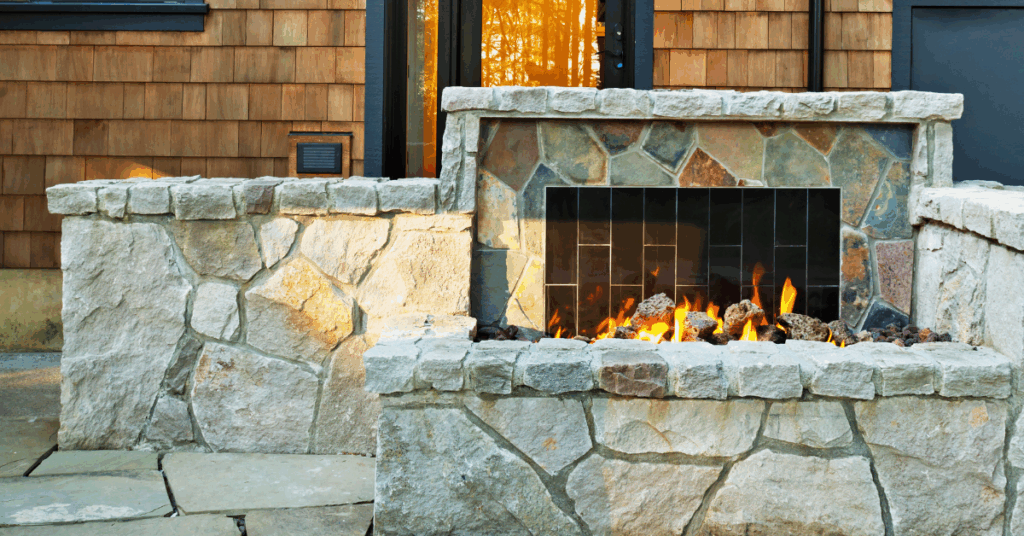
Talk about good timing. It’s nearly fall here in the Mid-Atlantic. Could there be a better time to read a blog about building an outdoor fireplace? It’s hard to imagine there could be. With the coming arrival of cooler weather, now is the perfect time to think through every aspect and every angle of such an enterprise. But, as with any construction project, regardless of its size, it’s essential to plan carefully. An outdoor fireplace is more than just a design statement; it involves safety, functionality, and compliance with local codes. By thinking through all the critical details ahead of time, you’ll end up with a feature that not only enhances your outdoor space but also provides enjoyment for years to come.
1. Purpose & Usage
Start by defining your goals for the fireplace. Will it primarily be for entertaining, for creating a cozy atmosphere for gatherings? Or do you envision it as a spot for personal relaxation, where you can curl up with a good book and a blanket? Some homeowners also design their fireplaces with cooking in mind, adding features like pizza ovens or grill inserts. Also, consider how often you’ll use your backyard fireplace and during which seasons. A large wood-burning fireplace may be ideal for frequent use in colder months, while a smaller gas unit may suit the occasionally cool summer evening. Clarifying your intended usage will guide every other decision, from size and placement to fuel type.
2. Location & Safety
Where you physically position your backyard fireplace is one of the most important decisions you’ll make, with safety always taking precedent. It mustn’t be positioned too close to your home, fences, or any overhanging trees. It must be set on a stable, nonflammable surface, where sparks or embers won’t pose a risk. Wind direction is another factor to consider. The last thing you want is smoke blowing directly into your seating area, or worse, into your neighbor’s yard. Also, be mindful of proximity to property lines; positioning the fireplace too close to the house next door could lead to complaints.
3. Local Codes & Permits
Before breaking ground, check your city’s building codes and fire regulations. Many municipalities require permits for outdoor fireplaces, and homeowners’ associations (HOAs) often have additional rules about size, location, and fuel type. You may also need to comply with specific fire safety requirements, such as chimney height or the inclusion of spark arrestors. Failing to secure the necessary approvals can result in fines, or even having to dismantle your new fireplace. In other words, do your due diligence when it comes to your outdoor fireplace installation.
4. Fuel Considerations
Another key consideration when it comes to building an outdoor fireplace is choosing the right fuel source:
- Wood-Burning
Traditional and authentic, wood-burning fireplaces offer the classic fireplace experience. However, they also require storage space for firewood, produce smoke, and need more frequent cleaning.
- Gas
Clean-burning and convenient, gas fireplaces light instantly and require minimal upkeep. They do, however, need a natural gas line installed, which adds to initial costs.
- Propane
Portable and flexible, propane fireplaces are a great option if you don’t have access to natural gas. They provide convenience but do require ongoing tank refills.
5. Design & Materials
Your outdoor fireplace installation should complement your outdoor space both in style and functionality. Rustic stone creates a natural look, while concrete or metal better suits more modern settings. Brick offers a classic, durable option that works with a great many home styles. Durability of materials is crucial, as well, especially in regions with freeze-thaw cycles or heavy rainfall (like the Mid-Atlantic). Professional landscapers can be a big help when it comes to choosing the best materials for your backyard fireplace: matching its design with that of your patio or garden for a cohesive look that will last.
6. Budget & Installation Costs
The cost of building an outdoor fireplace can vary widely. A small, prefab unit may be relatively affordable, while a custom-built masonry fireplace can be a significant investment. Be sure to account not only for the upfront construction costs but also for long-term expenses like fuel and maintenance. And while DIY-kits do exist, larger installations are best handled by the pros, as expert installation ensures proper ventilation, structural stability, and compliance with fire codes.
7. Maintenance and Longevity
Like with any outdoor feature, a backyard fireplace requires ongoing care. Wood-burning units need regular ash removal and chimney cleaning. Gas and propane fireplaces require less upkeep but should be inspected periodically for leaks or burner issues. Seasonal maintenance is also key. Cover your fireplace during harsh weather and schedule annual inspections to ensure it remains safe and functional. With proper care, your outdoor fireplace will last for many years, becoming a cherished part of your outdoor living area.
Year-Round Enjoyment
Though fall is indeed approaching, building an outdoor fireplace can truly transform your backyard into a year-round destination for warmth, comfort, and entertainment. But before building, it’s important to think carefully about purpose, location, local regulations, fuel options, design, budget, and maintenance. By planning ahead, you’ll create a fireplace that’s not only beautiful but also safe, functional, and long-lasting. At RELS Landscaping, we help homeowners design and build outdoor features that perfectly suit their lifestyle and space. If you’re considering adding an outdoor fireplace, get in touch today. Our team can guide you through every step—from planning and design to professional installation—so you can enjoy the cozy glow of your new fireplace with complete peace of mind.