Your seed is a diva. A drama queen. A narcissist. Your seed thinks the world revolves around it, and in the world of landscaping it does. A beautiful landscape doesn’t happen by accident. While quality seed and good soil are essential, many landscape projects fail because newly seeded areas simply can’t withstand weather, runoff, and slope-related challenges. That’s where smart planning and the right protection for your diva-seed make all the difference. When seeding and erosion control are approached as one coordinated strategy, landscapes establish faster, grow more evenly, and last longer.
1. Why Seeding Fails Without Proper Erosion Control
Freshly seeded soil is extremely vulnerable. Without protection, even a moderate rain can undo hours of prep work.
Common causes of seed failure include:
- Heavy rain washing seed downhill
- Uneven germination due to exposed soil
- Runoff concentrating in low areas or along slopes
- Poor results in areas with challenging sloped yard drainage
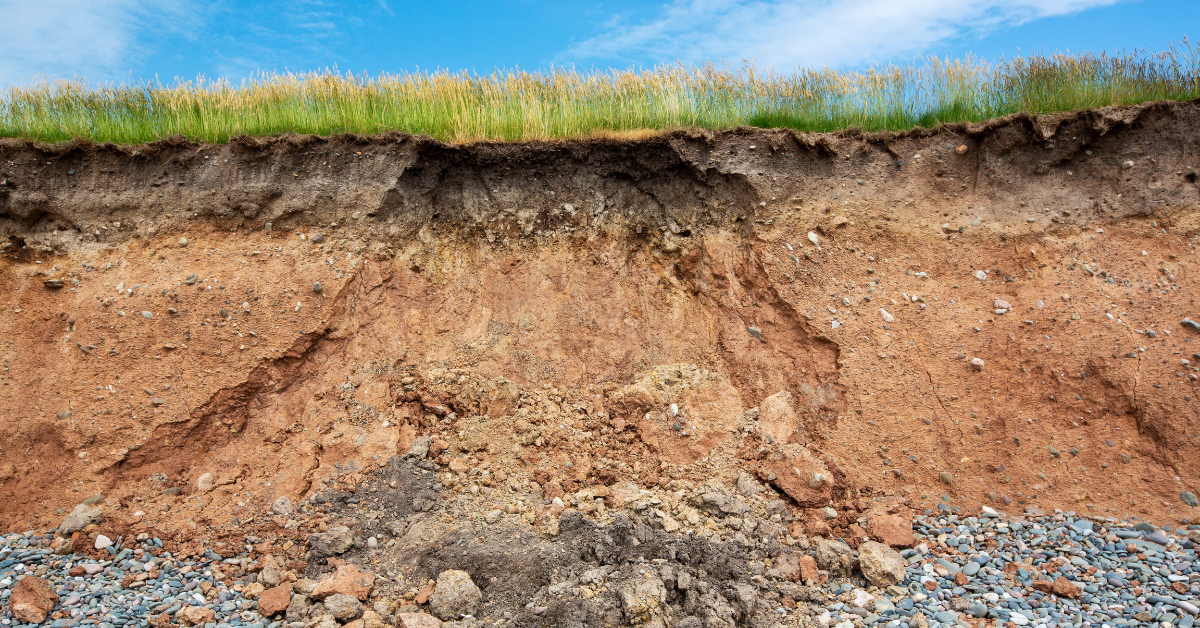
Rain, runoff, and slope grade all play major roles during the first few weeks after seeding. On sloped sites, water naturally follows the path of least resistance, taking seed and topsoil with it. This is why controlling erosion is critical during the establishment phase; it stabilizes the soil long enough for roots to take hold and do their job.
2. Understanding the Relationship Between Seeding and Controlling Erosion
Seeding and protection measures work best when they’re planned together, not treated as separate steps.
Erosion control products help by:
- Holding seed in place during rainfall
- Retaining moisture for consistent germination
- Reducing surface runoff on slopes
In most cases, these products should be installed immediately after seeding, not days later. When both methods are combined from the start, germination rates improve, reseeding costs are reduced, and more uniform results are delivered across the site.
3. Common Erosion Control Methods Used With Seeding
There’s no one-size-fits-all solution when it comes to successful seeding. The right approach depends on slope, soil type, and water flow.
Common options include:
- Straw blankets and specialized mats to protect seed and soil
- Hydroseeding support systems that combine seed, mulch, and tackifiers
- Silt fencing and wattles for managing runoff in drainage areas
These methods are especially effective on slopes and properties dealing with sloped yard drainage, where water movement needs to be slowed and redirected. Choosing the correct solution to keep erosion at bay ensures seed stays put while allowing water and sunlight to reach the soil surface.
4. Best Practices for Successful Landscape Establishment
Even the best materials won’t perform without proper installation.
Best practices include:
- Thorough soil preparation and grading
- Selecting seed blends suited to site conditions
- Correctly anchoring blankets or mats
- Avoiding overwatering that can cause displacement
Ongoing maintenance during establishment is just as important. Monitor watering schedules, inspect for movement after storms, and repair small problem areas before they become big ones, especially in zones affected by sloped yard drainage.
5. Plants Good for Erosion Control
While turf plays an important role, plant selection is another powerful tool for stabilizing soil long-term. Choosing the right vegetation reduces reliance on surface materials alone.
Plants good for erosion control include:
- Native grasses with deep, fibrous root systems
- Groundcovers that spread and lock soil in place
- Perennials well-suited for slopes and drainage zones
Using plants good for erosion control helps reinforce seeded areas, slow runoff, and improve soil structure over time. When combined with proper seeding, these plants create landscapes that are both functional and visually appealing.
6. Additional Considerations for Challenging Sites
Some landscapes require extra attention due to soil composition, traffic patterns, or extreme grades. Clay-heavy soils common in the Mid-Atlantic can compact easily, limiting root penetration and increasing runoff.
In these situations, combining soil amendments with proper seeding techniques and measures for controlling erosion dramatically improves outcomes. High-traffic areas may also benefit from reinforced mats that protect young growth while allowing roots to establish.
Addressing these challenges early helps prevent recurring washouts, patchy turf, and ongoing maintenance headaches.
Give Your Seed the Treatment It So Clearly Deserves
Improper installation of erosion control measures is one of the most common causes of seed failure and costly rework. Understanding products, site conditions, and correct techniques separates short-term fixes from long-term success.
Learn more about professional seeding and erosion control techniques at our upcoming RELS University class: January 28, from 9AM-2PM. These hands-on educational opportunities are designed to inspire and connect professionals as well as DIYers.
Professional education in this area ensures:
- Correct material selection
- Proper installation methods
- Better outcomes for challenging slopes and drainage areas
From seed selection to real-world installation strategies, RELS Landscaping Supply equips contractors and property owners with the products, training, and expertise needed for landscapes that last. To get started the right way from the ground up, contact or visit RELS Landscaping Supply today.